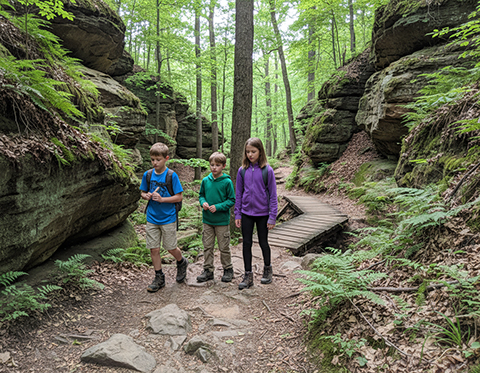
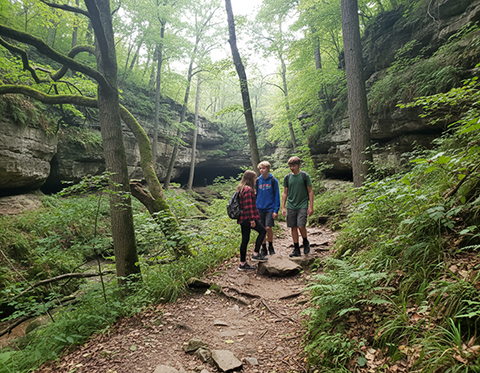
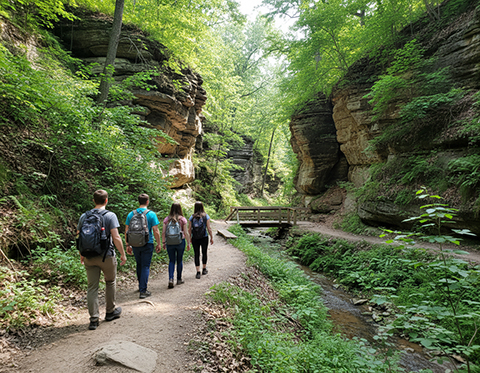
Hiking in Iowa offers a peaceful escape into rolling prairies, wooded bluffs, and scenic river valleys. While known for its farmland, Iowa surprises visitors with its variety of natural landscapes and well-maintained trail systems. Effigy Mounds National Monument features trails that wind past prehistoric Native American burial mounds with sweeping views of the Mississippi River. In Ledges State Park, hikers can explore sandstone canyons and shaded woodlands, while the Loess Hills in western Iowa offer unique ridgeline hikes with panoramic vistas. With a mix of short, family-friendly paths and more rugged terrain, Iowa’s hiking trails provide a serene and nature-filled experience perfect for outdoor lovers.
Backbone Trail (Backbone State Park)
Hiking the Backbone Trail at Backbone State Park offers a wonderful introduction to the rugged beauty of northeastern Iowa. Located in Iowa’s oldest state park, the trail follows a narrow ridge of ancient limestone known as the “Devil’s Backbone.” The rocky terrain, wooded slopes, and views over the Maquoketa River make the hike feel surprisingly wild. As you walk along the ridge, breaks in the trees reveal attractive views of the surrounding forest and river valley, especially when the foliage begins changing color in autumn.
One of the most enjoyable features of the Backbone Trail is the variety packed into a relatively small area. Hikers encounter exposed rock formations, limestone cliffs, forested sections, and overlooks along the ridge. Some portions are narrow and rocky, requiring careful footing, but these sections also give the trail much of its character. The surrounding hardwood forest provides welcome shade during warmer months, while spring brings fresh greenery and wildflowers. Wildlife sightings are also possible, including deer, squirrels, songbirds, and birds of prey soaring above the valley.
A hike on the Backbone Trail can easily become part of a full day exploring Backbone State Park. After walking the ridge, visitors can explore additional trails, enjoy the Maquoketa River, have a picnic, or simply relax among the park’s wooded hills and limestone formations. Sturdy hiking shoes are a good idea because exposed rocks can become slippery when wet, and hikers should use extra care near steep drop-offs. For anyone exploring Iowa on foot, the Backbone Trail is a memorable hike that combines interesting geology, scenic overlooks, forest scenery, and a little adventure in one of the state’s most historic natural areas.
Wildcat Den Trail (Wildcat Den State Park)
Hiking the Wildcat Den Trail at Wildcat Den State Park offers an unexpectedly rugged adventure in eastern Iowa, just outside Muscatine. The park is known for its striking sandstone formations, wooded ravines, rocky cliffs, and narrow passages that give the landscape a character quite different from the surrounding farmland. As you follow the trails through the forest, massive rock walls and unusual formations appear among the trees, creating an atmosphere that feels secluded and surprisingly wild. Spring and autumn are particularly attractive times to visit, when wildflowers or colorful foliage add to the scenery.
One of the highlights of hiking at Wildcat Den is exploring formations with colorful names such as the Devil’s Punch Bowl and Fat Man’s Squeeze. The trail winds through and around sandstone cliffs that have been gradually shaped by water, wind, and erosion. In places, hikers pass through narrow rocky corridors, climb uneven terrain, and descend into cool, shaded ravines. The combination of rock formations and dense woodland makes the hike interesting around nearly every bend, although sturdy footwear is recommended because rocks, roots, and wet surfaces can make some sections slippery.
Wildcat Den State Park also makes an excellent destination for a leisurely day outdoors. After hiking, visitors can explore other areas of the park, enjoy a picnic, or visit the historic Pine Creek Grist Mill and nearby Melpine Schoolhouse. Photographers will find plenty of interesting subjects among the sandstone formations, forest, streams, and historic structures. With its mixture of geology, history, and woodland scenery, hiking the Wildcat Den Trail is a rewarding way to experience one of the more distinctive natural landscapes near Muscatine.
Maquoketa Caves Loop (Maquoketa Caves State Park)
Hiking the Maquoketa Caves Loop at Maquoketa Caves State Park is one of the most unusual outdoor experiences in Iowa. The park is famous for its limestone cliffs, wooded ravines, natural rock formations, and numerous caves ranging from large passages to small openings tucked into the hillsides. The trail system winds through a lush forest where stairways, footpaths, and boardwalks lead hikers between caves and impressive geological features. The cool, shaded surroundings can make the park feel far removed from Iowa’s open farmland, providing an adventurous setting for hikers of many ages.
A highlight of the hike is exploring the park’s caves, including the impressive Dancehall Cave, which is large enough to walk through and serves as one of the park’s signature attractions. Elsewhere along the loop, hikers encounter smaller caves, rock shelters, steep limestone walls, and narrow passages. Some caves require bending, crawling, or squeezing through confined spaces, although visitors can simply remain on the main trails if they prefer a more conventional hike. The combination of underground exploration and woodland hiking makes the route especially entertaining, but sturdy shoes and a flashlight or headlamp are useful for anyone planning to venture inside the darker caves.
The surrounding forest adds another dimension to the hike, particularly during spring when vegetation becomes lush and during autumn when the hardwood trees turn brilliant shades of yellow, orange, and red. Because the terrain includes stone steps, damp surfaces, exposed roots, and uneven rock, hikers should take their time and use extra caution after rain. Whether you explore every accessible cave or simply enjoy the trails and scenery from above ground, the Maquoketa Caves Loop provides a memorable combination of hiking, geology, and exploration that makes Maquoketa Caves State Park one of Iowa’s most distinctive outdoor destinations.
Effigy Mounds Trails (Effigy Mounds National Monument)
Hiking the trails at Effigy Mounds National Monument near Harpers Ferry offers a beautiful combination of natural scenery, history, and cultural significance. The monument protects hundreds of ancient Native American burial and ceremonial mounds, including remarkable earthworks shaped like bears and birds. Trails climb from the Mississippi River valley into peaceful hardwood forests and across high bluffs, allowing hikers to experience a landscape that has held deep meaning for Indigenous peoples for many centuries. The quiet surroundings and historical importance of the mounds give a hike here a character quite different from an ordinary walk in the woods.
Several trails lead visitors past groups of mounds and toward overlooks high above the Mississippi River. One of the most rewarding destinations is the Fire Point overlook, where hikers can enjoy expansive views across the river, forested islands, wetlands, and distant hills. Continuing farther along the bluff leads to additional mound groups and viewpoints, while longer routes provide a more secluded experience away from the busiest areas. The trails include steady climbs and occasional steep sections, but much of the hiking is manageable for visitors accustomed to moderate woodland trails. Spring wildflowers and colorful autumn foliage make these routes especially attractive during those seasons.
Hiking at Effigy Mounds is also an opportunity to appreciate the landscape with respect for the people who created and cared for these remarkable earthworks. Visitors should remain on designated trails and never walk on, disturb, or remove anything from the mounds. Taking time to visit the monument's interpretive exhibits before hiking can provide valuable background about the mound-building cultures and the continuing importance of this landscape to affiliated Tribal Nations. With its sweeping Mississippi River views, peaceful forests, ancient earthworks, and sense of history, Effigy Mounds National Monument is one of the most meaningful hiking destinations in northeastern Iowa.
Ledges State Park Trails
Hiking the trails at Ledges State Park offers a scenic adventure through one of central Iowa’s most distinctive landscapes. Located near Boone and the Des Moines River, the park is known for its dramatic sandstone cliffs, wooded hills, deep ravines, and the winding waters of Pea’s Creek. Trails lead hikers beneath towering rock formations and through forests of oak, maple, and other hardwoods. The contrast between the rugged stone ledges and the peaceful woodland makes the park an especially enjoyable destination for anyone who wants more than a simple walk through level countryside.
The trail system provides opportunities to climb from the valley floor to higher overlooks, where hikers can enjoy impressive views across the Des Moines River valley. Along the way, paths pass beside sandstone outcroppings, small streams, rocky slopes, and heavily shaded ravines. Some sections include steep climbs, stone steps, exposed roots, and uneven surfaces, adding a moderate challenge to the hike. Spring brings fresh greenery and wildflowers, while autumn transforms the surrounding forest into a colorful display of red, orange, and gold.
A day of hiking at Ledges State Park can easily be combined with picnicking, wildlife watching, photography, and exploring other areas of this historic Iowa park. Hikers may see deer, squirrels, woodpeckers, and numerous other woodland birds while traveling through the quieter sections of the forest. Good hiking shoes are recommended, particularly after rain when rocks and trails can become slippery, and visitors should use care around steep slopes and cliff edges. With its sandstone formations, forested ravines, scenic overlooks, and peaceful river-valley setting, Ledges State Park provides one of the most rewarding hiking experiences in central Iowa.
Neal Smith Trail (Des Moines)
Hiking the Neal Smith Trail offers a pleasant way to explore the Des Moines area while enjoying a mixture of river scenery, wooded stretches, parks, and open landscapes. This paved recreational trail follows portions of the Des Moines River and Saylorville Lake corridor, connecting the city with recreation areas to the north. Because the route is paved and generally well maintained, it is popular with walkers, runners, and bicyclists as well as hikers. The combination of convenient access and natural surroundings makes it an excellent choice for anyone wanting to enjoy a long walk without traveling far from the city.
As you travel along the Neal Smith Trail, the scenery gradually changes between shady woodland, riverbanks, wetlands, open grassy areas, and views of Saylorville Lake. Bridges and elevated sections provide interesting perspectives across the water, while quieter portions of the trail offer opportunities to watch birds and other wildlife. Hikers can choose a short out-and-back walk or cover a much longer section of the route, making the trail suitable for anything from a casual morning stroll to an extended day hike. The relatively smooth surface also makes it more accessible than many rugged hiking trails.
One of the pleasures of hiking the Neal Smith Trail is experiencing how easily the urban environment gives way to peaceful natural scenery. Early mornings can be particularly enjoyable, when temperatures are cooler and wildlife tends to be more active, while autumn brings colorful foliage to the wooded portions of the route. Since much of the trail is shared with cyclists, hikers should remain aware of approaching bicycles and stay to the appropriate side of the path. With its convenient location, varied scenery, and connections to parks and recreation areas along the Des Moines River and Saylorville Lake, the Neal Smith Trail is a rewarding way to explore central Iowa on foot.
Hitchcock Nature Center Trails
Hiking the trails at Hitchcock Nature Center provides an opportunity to explore the rugged beauty of Iowa’s Loess Hills. Located near Honey Creek in western Iowa, the preserve features steep ridges, deep valleys, open prairie, and wooded slopes formed from enormous deposits of windblown loess soil. A network of trails leads hikers through this unusual terrain, with frequent changes in elevation and scenery. From the higher ridges, sweeping views stretch across the surrounding hills and toward the broad Missouri River valley, making this one of the most scenic hiking areas in the state.
The trails range from relatively easy walks to more demanding routes with steep climbs and descents. Hikers can wander through oak woodlands, cross restored prairie, and follow narrow ridgelines where the distinctive shape of the Loess Hills is especially apparent. Wildflowers and prairie grasses add color during the warmer months, while the forested portions provide shade and opportunities to observe birds and other wildlife. Some of the most memorable hiking comes from combining several interconnected trails, allowing visitors to create a route that matches the distance and difficulty they prefer.
Each season gives the Hitchcock Nature Center a different character. Spring brings fresh vegetation and wildflowers, summer fills the prairies with tall grasses, and autumn covers the wooded hillsides with colorful foliage. Winter can reveal the contours of the landscape particularly well after the leaves have fallen. Because some trails are steep and can become muddy or slippery following rain or snow, sturdy footwear and adequate water are advisable. With its challenging terrain, expansive views, native prairie, and unusual geology, hiking the Hitchcock Nature Center trails is an excellent way to experience the remarkable Loess Hills of western Iowa.
Yellow River State Forest Trails
Hiking the trails of Yellow River State Forest offers one of the more rugged and secluded outdoor experiences in Iowa. Located in the northeastern part of the state near Harpers Ferry, the forest spreads across thousands of acres of wooded hills, limestone bluffs, narrow valleys, and clear streams. The landscape is part of Iowa’s Driftless Area, a region known for steep terrain that differs greatly from the rolling farmland found across much of the state. Trails wind through dense hardwood forests and along ridges, providing hikers with a genuine backcountry atmosphere and plenty of opportunities to enjoy quiet surroundings.
The extensive trail network allows hikers to choose anything from a relatively short woodland walk to a much longer and more demanding outing. Routes climb steep hills, descend into valleys, follow forest roads, and pass through areas of oak, hickory, maple, and other native trees. Wildlife is abundant, and hikers may encounter white-tailed deer, wild turkeys, squirrels, and a variety of woodland birds. Small streams and the branches of the Yellow River add to the scenery, while higher portions of the forest provide attractive views across the deeply carved hills and valleys. Autumn is particularly impressive, when the surrounding hardwood forest becomes a brilliant mixture of red, orange, yellow, and gold.
Because Yellow River State Forest is larger and more remote than many Iowa hiking destinations, visitors should prepare carefully before heading onto the longer trails. Sturdy hiking shoes, drinking water, a trail map, and appropriate clothing are especially useful, and hikers should allow extra time for steep or muddy sections. The forest’s size also makes it a wonderful place for those who enjoy solitude, since it is possible to travel well beyond the busiest recreation areas and experience long stretches of peaceful woodland. With its rugged terrain, extensive forests, abundant wildlife, and backcountry character, Yellow River State Forest provides some of the most adventurous and rewarding hiking in Iowa.
Preparation Canyon Trail (Loess Hills State Forest)
Hiking the Preparation Canyon Trail offers a peaceful journey through the distinctive landscape of western Iowa’s Loess Hills. Located within Preparation Canyon State Park and surrounded by the Loess Hills State Forest, the area is characterized by steep, narrow ridges, deep wooded valleys, and hills formed from thick deposits of windblown loess soil. Trails climb through a mixture of hardwood forest and open prairie, providing an experience that can feel surprisingly rugged. From the higher ground, hikers are rewarded with beautiful views across the rolling hills and valleys of this unusual region.
The trails around Preparation Canyon range from quiet woodland paths to more strenuous routes involving repeated climbs and descents. Hikers may pass beneath stands of oak and other hardwoods before emerging onto open ridges covered with native grasses and wildflowers. The narrow ridgelines provide some of the most memorable scenery, particularly where openings reveal distant views across the Loess Hills. Deer, wild turkeys, songbirds, and other wildlife are commonly associated with these forests and grasslands, adding another element of interest to a day on the trail.
Preparation Canyon is especially appealing to hikers looking for solitude and a more natural experience away from heavily developed recreation areas. Spring brings fresh greenery and wildflowers, while autumn is particularly beautiful as the wooded slopes change to shades of yellow, orange, and red. The steep terrain can become muddy and slippery after rain, so sturdy hiking shoes, drinking water, and a trail map are recommended for longer outings. With its quiet forests, prairie-covered ridges, challenging hills, and expansive views, hiking Preparation Canyon provides an excellent introduction to the remarkable landscape of Iowa’s Loess Hills.
Raccoon River Valley Trail
Hiking the Raccoon River Valley Trail offers a relaxing way to experience the farmland, small towns, woodlands, and river valleys of central Iowa. Stretching through communities west and northwest of Des Moines, this extensive paved recreational trail follows former railroad corridors and provides a generally gentle route for walkers, runners, and bicyclists. The mostly level surface makes it quite different from Iowa’s rugged woodland trails, allowing hikers to concentrate on the scenery rather than difficult terrain. With numerous access points along the route, visitors can easily choose anything from a short walk to a much longer day hike.
The scenery changes considerably as the trail passes through rural countryside, shaded groves, wetlands, and communities such as Adel, Redfield, Perry, and Panora. Bridges carry the trail across streams and portions of the Raccoon River watershed, while stretches through agricultural country provide broad views of Iowa’s landscape. Wildlife can often be spotted along quieter sections, including deer, rabbits, songbirds, and waterfowl. Because the trail connects numerous towns and recreation areas, hikers can also stop for food, rest, or sightseeing before continuing their journey.
One of the pleasures of hiking the Raccoon River Valley Trail is the freedom to tailor the outing to your available time and energy. Spring and autumn are particularly comfortable seasons for longer walks, while summer hikers may prefer mornings and evenings when temperatures are cooler. Since the trail is popular with cyclists, walkers should remain alert, keep to their side of the path, and allow faster users to pass safely. With its smooth surface, long-distance possibilities, peaceful countryside, and convenient connections between welcoming Iowa communities, the Raccoon River Valley Trail provides an enjoyable alternative to traditional backcountry hiking.