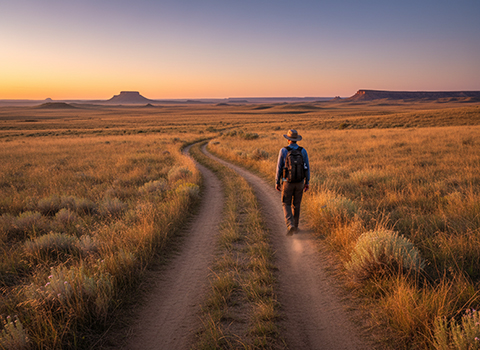
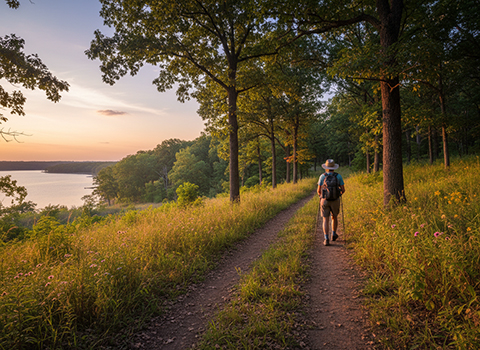
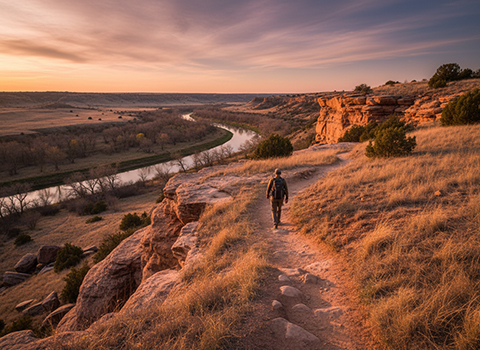
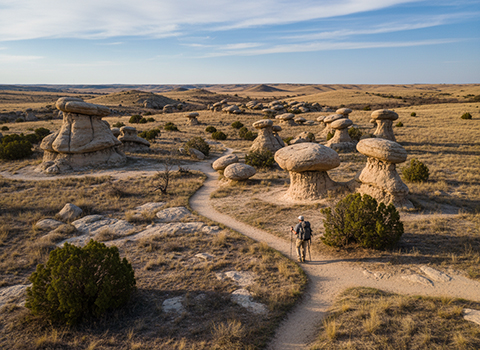
Hiking in Kansas offers a quieter, wide-open experience that highlights the subtle beauty of the Great Plains rather than dramatic elevation. Trails wind through tallgrass prairie preserves, wooded river corridors, limestone bluffs, and rolling Flint Hills, where expansive views stretch to the horizon. Destinations such as Tallgrass Prairie National Preserve, Elk City State Park, and Konza Prairie reveal seasonal wildflowers, grazing bison, and abundant birdlife. While Kansas trails are generally less strenuous than those in mountainous states, they reward hikers with solitude, big skies, and a strong sense of connection to the land, especially during spring and fall when temperatures are mild and the prairie is at its most vibrant.
Tallgrass Prairie National Preserve Trails (Flint Hills)
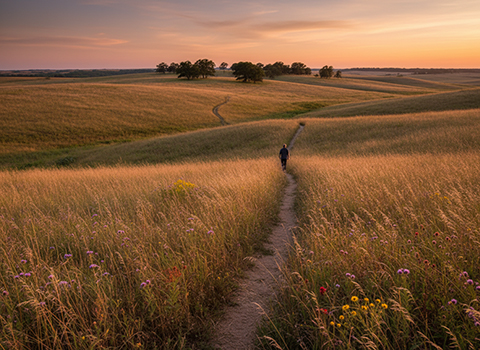
Hiking the Tallgrass Prairie National Preserve in Kansas’s Flint Hills offers a rare chance to experience one of North America’s last remaining tallgrass prairie ecosystems. Stretching across rolling limestone hills, the preserve showcases wide-open landscapes where grasses can grow taller than a person and the horizon seems endlessly distant. With few trees and expansive skies, the scenery emphasizes subtle changes in light, wind, and season rather than dramatic landmarks. Bison grazing across the hills add a powerful sense of place, reminding hikers of the prairie’s deep natural and cultural history.
The preserve features a network of well-marked trails that range from short, gentle walks to longer, more demanding hikes with steady elevation changes. Trails such as the Southwind Nature Trail and longer backcountry routes lead hikers across ridgelines, into shallow draws, and past historic ranch structures. While the climbs are gradual, the cumulative elevation and lack of shade can make hikes feel more challenging than expected, especially during warmer months. Sturdy footwear, sun protection, and water are essential for a comfortable experience.
Beyond the physical hike, the Tallgrass Prairie National Preserve offers a deeply immersive and contemplative experience. Seasonal wildflowers color the hills in spring and early summer, while autumn brings golden grasses that ripple in the wind. Meadowlarks, prairie chickens, and other grassland birds provide a constant soundtrack, and quiet moments allow hikers to appreciate the vastness and resilience of the prairie. Whether on a short interpretive trail or a longer backcountry route, hiking here provides a meaningful connection to a landscape that once covered much of the central United States.
Konza Prairie Nature Trail (Near Manhattan)
Hiking the Konza Prairie Nature Trail near Manhattan, Kansas offers one of the most iconic tallgrass prairie experiences in the state. Set within the Flint Hills, the preserve features rolling limestone hills covered in native grasses and wildflowers, with sweeping views that stretch across the Kansas landscape. The open terrain and expansive skies give the trail a sense of scale and solitude, while interpretive signs along the route highlight the ecological importance of this protected prairie. Each season brings noticeable changes, from spring blooms to autumn’s golden grasses.
The Konza Prairie Nature Trail consists of several loop options, allowing hikers to choose routes that range from moderate to fairly challenging by Kansas standards. While distances are manageable, the steady climbs and descents over rocky limestone paths can be physically demanding, especially in warm or windy conditions. There is very little shade, so hikers should come prepared with water, sun protection, and sturdy footwear. The higher elevations reward the effort with panoramic views of the surrounding hills and valleys.
Beyond the physical challenge, hiking the Konza Prairie Nature Trail offers a rich and immersive natural experience. Native birds such as meadowlarks and grassland sparrows are commonly heard, and deer and other wildlife are often spotted moving through the grasses. In spring and early summer, wildflowers add color and texture to the hillsides, while controlled burns help maintain the health of the prairie ecosystem. For those seeking a true Flint Hills hike that combines beauty, education, and a sense of wide-open space, Konza Prairie delivers an unforgettable outing.
Elk River Hiking Trail (Elk City State Park)
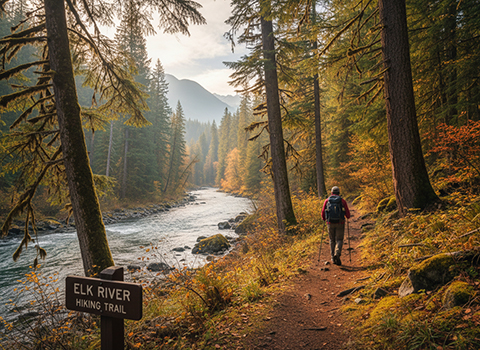
Hiking the Elk River Hiking Trail at Elk City State Park offers one of the most rugged and scenic hiking experiences in Kansas. Located in the state’s southeastern corner, the trail winds through dense hardwood forests, rocky bluffs, and along the winding Elk River itself. The terrain feels surprisingly wild, with steep hills, exposed rock, and shaded river corridors creating a landscape more commonly associated with the Ozarks than the Great Plains. The mix of forest and water gives the hike a secluded, immersive feel, especially compared to Kansas’s more open prairie trails.
The Elk River Hiking Trail is the longest trail in Kansas, stretching for many miles and offering both day-hike and backpacking opportunities. Elevation changes are frequent and sometimes steep, making sections of the trail physically demanding. Narrow paths, rocky footing, and occasional creek crossings add to the challenge and sense of adventure. While well-marked, the trail rewards hikers who take their time, offering scenic overlooks, quiet river access points, and deep forest stretches where solitude is common.
Beyond its physical challenge, the Elk River Hiking Trail is rich in wildlife and natural beauty. Deer, wild turkeys, and a wide variety of birds are frequently seen, while spring brings blooming dogwoods and wildflowers to the forest floor. Fall hiking is especially popular, as vibrant foliage transforms the hillsides into shades of red and gold. For hikers looking for a longer, more immersive trail that showcases a lesser-known but rugged side of Kansas, the Elk River Hiking Trail stands out as a true highlight of the state’s outdoor offerings.
Castle Rock Badlands Trail (Gove County)
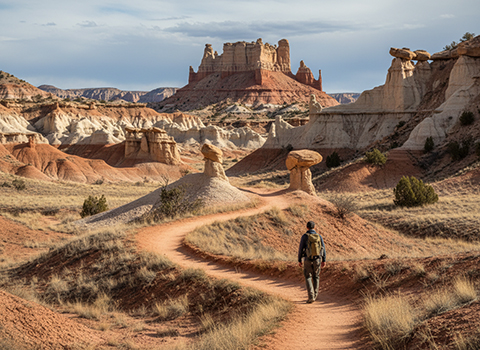
Hiking the Castle Rock Badlands Trail in western Kansas offers a striking glimpse into one of the state’s most unusual and dramatic landscapes. The trail winds through chalk and limestone formations that rise abruptly from the plains, creating towering spires, buttes, and weathered cliffs that resemble castle ruins. Formed millions of years ago when this area was covered by a shallow sea, the pale rock formations stand in sharp contrast to the surrounding grasslands. The setting feels remote and almost surreal, making it a memorable destination for hikers interested in geology and wide-open scenery.
The hike itself is relatively short and easy, making it accessible to most visitors, but the terrain is uneven and exposed. Trails are informal, often following natural paths around and between the formations, and there is little shade along the route. Because of the openness of the landscape, hikers should be prepared for wind, sun, and rapidly changing weather conditions. While the elevation gain is minimal, careful footing is needed near eroded edges and loose rock.
Beyond its visual impact, hiking the Castle Rock Badlands Trail provides a quiet and contemplative experience. The area’s isolation means crowds are usually light, allowing hikers to explore at a relaxed pace and take in expansive views of the prairie stretching to the horizon. Wildlife sightings may include prairie birds and small mammals adapted to the arid environment. For those seeking a short but unforgettable hike that highlights a lesser-known side of Kansas, Castle Rock Badlands delivers a unique blend of natural history, solitude, and striking scenery.
Monument Rocks Trail (Gove County)
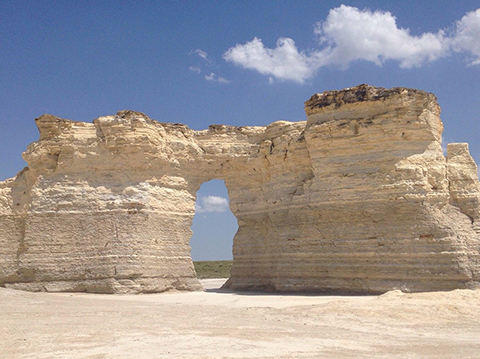
Hiking the Monument Rocks Trail in Gove County, Kansas takes visitors to one of the most iconic and visually striking natural landmarks in the state. Designated a National Natural Landmark, Monument Rocks features towering chalk formations that rise dramatically from the surrounding prairie, with arches, spires, and buttes sculpted by wind and water over millions of years. These formations were once part of a shallow inland sea, and their pale stone contrasts sharply with the green and gold grasses of the high plains. The setting feels both ancient and isolated, offering a powerful sense of place.
The hike at Monument Rocks is short and informal, making it accessible to hikers of all ages and abilities. Trails are not heavily developed, and most exploration involves walking across open grass and gently uneven terrain around the rock formations. While elevation changes are minimal, the area is fully exposed to sun and wind, so visitors should bring water, sun protection, and sturdy footwear. Because the chalk formations are fragile, hikers are encouraged to admire them from a respectful distance and avoid climbing on the rocks to preserve their integrity.
Beyond the physical walk, Monument Rocks provides a memorable and contemplative hiking experience. The quiet of the surrounding prairie and the vast, uninterrupted sky enhance the feeling of solitude and scale. Wildlife sightings may include prairie birds, raptors, and small mammals adapted to the open landscape. Whether visited as a quick stop or a longer, unhurried exploration, hiking the Monument Rocks Trail offers a rare chance to experience one of Kansas’s most dramatic natural wonders up close.
Cimarron National Grassland Trails (Southwest Kansas)
Hiking the Cimarron National Grassland Trails in southwest Kansas offers a remote and distinctly high-plains experience unlike anywhere else in the state. This vast grassland sits near the borders of Colorado and Oklahoma and is defined by open prairie, sandy soils, and long, uninterrupted horizons. The landscape feels stark yet expansive, with subtle beauty found in rolling grasslands, dry creek beds, and scattered cottonwood trees along the Cimarron River corridor. The sense of isolation and quiet is a major draw, making it ideal for hikers seeking solitude and wide-open space.
Trails in Cimarron National Grassland are generally informal and lightly developed, emphasizing exploration rather than structured hiking routes. Hikes often follow old ranch roads, riverbanks, or segments of the historic Santa Fe Trail, where wagon ruts can still be seen etched into the ground. The terrain is mostly flat to gently rolling, but sandy footing and exposure to sun and wind can make hikes more demanding than they appear on paper. Because shade is limited and services are sparse, hikers should carry plenty of water, navigation aids, and be prepared for changing weather conditions.
Beyond the physical hike, the Cimarron National Grassland offers a strong sense of historical and ecological connection. The area is rich in wildlife, including prairie birds, mule deer, pronghorn, and reptiles adapted to the dry environment. Spring and early summer bring wildflowers that briefly color the grasslands, while fall offers cooler temperatures and clear skies. For hikers interested in history, quiet landscapes, and the raw openness of the High Plains, the Cimarron National Grassland Trails provide a unique and deeply reflective outdoor experience.
Perry Lake Hiking Trails (Near Lawrence)
Hiking the Perry Lake Hiking Trails near Lawrence, Kansas offers a scenic blend of woodland, prairie, and shoreline landscapes centered around one of the region’s largest reservoirs. The trails wind through rolling hills covered in oak and hickory forests, with frequent views of the lake’s expansive shoreline and open water. This mix of forested paths and lakeside scenery makes the area visually diverse and appealing throughout the year. Its location near Lawrence and Topeka also makes Perry Lake a popular and accessible destination for both casual hikers and outdoor enthusiasts.
The trail system at Perry Lake includes several loop and connector trails that accommodate a wide range of hiking preferences. Routes vary from easy, relatively flat walks to longer hikes with moderate elevation changes, offering options for families as well as more experienced hikers. The trails are generally well-maintained, though rocky sections and exposed roots can appear in steeper areas. With multiple access points and trailheads, hikers can easily customize the length and difficulty of their outing.
Beyond the physical experience, hiking at Perry Lake offers excellent opportunities for wildlife observation and quiet recreation. Deer, wild turkeys, and a variety of songbirds are commonly seen along the trails, while the lake attracts waterfowl and raptors. Seasonal changes add to the appeal, with spring wildflowers, lush summer greenery, and colorful fall foliage enhancing the landscape. Whether enjoyed as a short nature walk or a longer loop around the hills and shoreline, the Perry Lake Hiking Trails provide a rewarding outdoor escape in northeastern Kansas.
Kanopolis State Park Trails (Central Kansas)
Hiking the Kanopolis State Park Trails in central Kansas reveals one of the state’s most rugged and geologically interesting landscapes. Located at the edge of the Smoky Hills region, the park is known for its sandstone bluffs, rocky canyons, and wooded ravines that feel unexpectedly dramatic for Kansas. Juniper trees, cottonwoods, and native grasses line the trails, while exposed rock formations add texture and visual interest throughout the park. The varied terrain and natural stone features make Kanopolis a favorite for hikers looking for something beyond open prairie.
The trail system at Kanopolis State Park offers a range of options, from short scenic walks to longer hikes with moderate elevation changes. Trails such as the Horsethief Canyon Trail and Buffalo Track Canyon Trail wind through narrow canyons and along rocky ridgelines, requiring careful footing in places. While distances are manageable, the combination of uneven terrain, stone steps, and climbs can make hikes more physically demanding than expected. Clear trail markings and loop options allow hikers to tailor their experience based on time and ability.
Beyond the trail itself, hiking at Kanopolis State Park provides a peaceful and immersive outdoor experience. Wildlife sightings often include deer, wild turkeys, and a wide variety of birds that inhabit the mix of forest and prairie. Spring brings wildflowers to canyon floors, while fall highlights the contrast between golden grasses and rugged stone walls. Whether you’re exploring shaded canyon trails or climbing to scenic overlooks above Kanopolis Lake, the park offers one of central Kansas’s most rewarding and distinctive hiking destinations.
Clinton State Park Trails (Near Lawrence)
Hiking the Clinton State Park Trails near Lawrence, Kansas offers a relaxing outdoor experience centered around Clinton Lake and its surrounding prairie and woodland landscapes. The park’s gently rolling terrain, open grasslands, and scattered stands of trees create a peaceful setting that feels spacious and inviting. Views of the lake frequently appear along the trails, adding scenic interest and a sense of calm, especially during early morning or late afternoon hikes. Its proximity to Lawrence makes Clinton State Park a convenient escape into nature without venturing far from town.
The trail system at Clinton State Park is well suited for hikers of all experience levels. Trails are generally easy to moderate, with gradual elevation changes and wide paths that are comfortable for walking. Many routes follow the shoreline or wind through prairie grass and light forest, offering flexible options for short walks or longer loop hikes. The open layout and clear trail markings make navigation simple, and the relatively gentle terrain is ideal for families or casual hikers.
Beyond the scenery, Clinton State Park provides good opportunities for wildlife viewing and seasonal enjoyment. Deer, rabbits, and a variety of birds are commonly spotted along the trails, while spring and summer bring wildflowers and lush greenery to the park. In autumn, changing leaves add color to the woodland sections, enhancing the hiking experience. Whether you’re looking for a quiet lakeside stroll or a longer walk through prairie and forest, hiking the Clinton State Park Trails offers an accessible and enjoyable way to experience northeastern Kansas’s natural beauty.
Mushroom Rock State Park Trail (Ellsworth County)
Hiking the Mushroom Rock State Park Trail in Ellsworth County, Kansas offers a brief but unforgettable encounter with one of the state’s most unusual geological features. The park is famous for its naturally sculpted limestone formations that resemble giant mushrooms, created by millions of years of erosion when softer rock layers wore away beneath harder capstones. Rising unexpectedly from the open prairie, these formations give the area a surreal and almost whimsical appearance. The contrast between the stark grassland and the oddly shaped rocks makes the park a popular stop for hikers and photographers alike.
The trail at Mushroom Rock State Park is short and easy, making it accessible to visitors of all ages and hiking abilities. Walking paths are informal and mostly flat, allowing hikers to explore the area at a relaxed pace. While the hike requires little physical effort, the terrain can be uneven in places, and the area is fully exposed to sun and wind. Because the rock formations are fragile and protected, visitors are encouraged to admire them without climbing, helping preserve the park’s unique features.
Despite its small size, hiking at Mushroom Rock State Park offers a quiet and reflective experience. The open landscape and minimal development allow hikers to enjoy wide views of the surrounding countryside and a sense of calm isolation. Wildlife sightings may include prairie birds and small mammals adapted to the grassland environment. As a short destination hike or a scenic stop along a longer trip, Mushroom Rock State Park provides a memorable glimpse into Kansas’s geological past and a distinctive outdoor experience.
Honorable Mentions
Kansas Hiking Tips
• Best seasons: April–May and September–October
• Summer hikes can be hot with little shade
• Watch for ticks and carry plenty of water