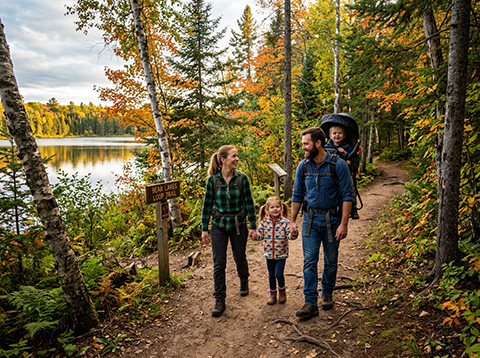
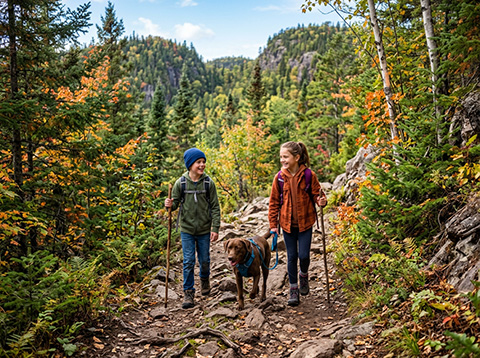
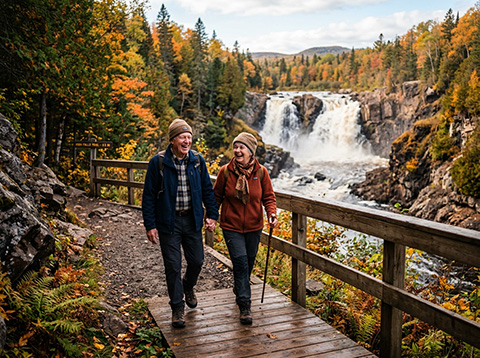
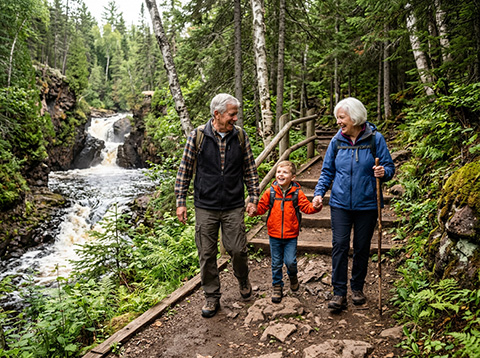
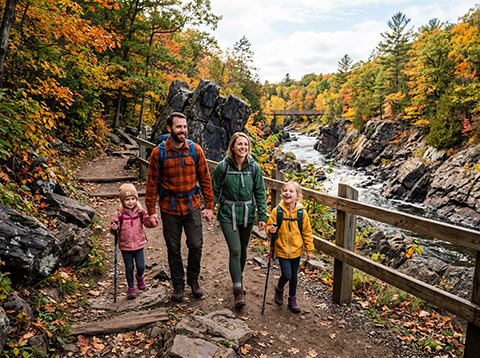
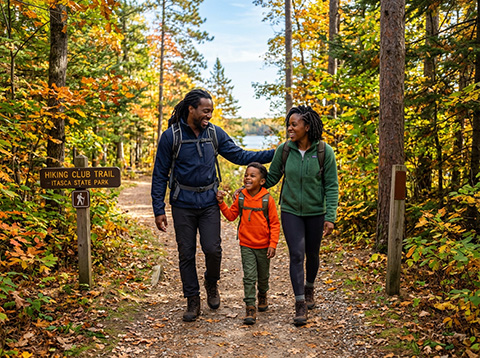
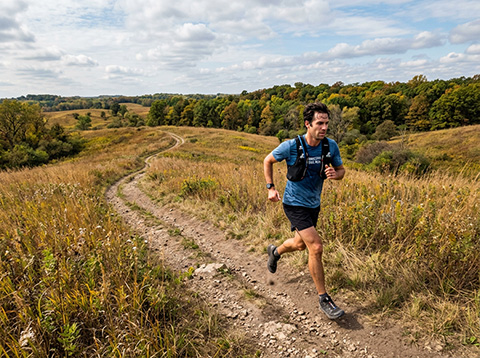
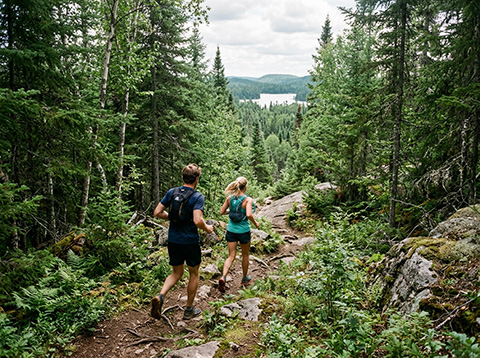
Hiking in Minnesota offers a wonderful opportunity to experience a landscape filled with sparkling lakes, rushing waterfalls, rocky ridges, deep northern forests, peaceful prairies, and the dramatic shoreline of Lake Superior. A hike along the North Shore might lead to a high overlook where the vast blue water stretches toward the horizon, while trails farther inland wind past quiet wilderness lakes where loons call across the water and wildlife moves through the surrounding forest. The Boundary Waters provide a feeling of true remoteness, while state parks offer everything from gentle woodland walks to challenging climbs over rugged terrain. Spring brings powerful waterfalls and emerging wildflowers, summer provides long days beneath green forests, and autumn transforms the northern hills into brilliant shades of red, orange, and gold. Whether following a peaceful trail near the headwaters of the Mississippi River or climbing a rocky ridge above Lake Superior, hiking in Minnesota provides fresh air, exercise, solitude, beautiful scenery, and a memorable opportunity to experience the natural character of the North Star State.
Bean and Bear Lakes Loop – Superior Hiking Trail
The Bean and Bear Lakes Loop near Silver Bay is one of the most scenic hikes along Minnesota's North Shore. The trail climbs through northern hardwood and evergreen forest before reaching high rocky ridges overlooking two beautiful inland lakes. The combination of rugged terrain, thick forest, exposed rock, and water makes this an excellent introduction to northeastern Minnesota.
The overlooks above Bean and Bear lakes are the highlights of the hike. From the ridge, hikers can look down upon the lakes nestled among heavily forested hills, creating a scene that feels far removed from towns and highways. The repeated climbs and rocky footing make the journey moderately strenuous, but they also add to the sense of adventure.
Autumn is particularly spectacular when brilliant red, orange, and yellow foliage surrounds the dark-blue lakes. Summer brings deep green forests and long daylight hours, while cooler spring weather can make the climbing comfortable. Taking time at the overlooks to rest and appreciate the scenery turns this into one of Minnesota's most memorable day hikes.
Eagle Mountain
A hike up Eagle Mountain provides the opportunity to reach the highest natural point in Minnesota. Located within the Boundary Waters Canoe Area Wilderness, the trail passes through a beautiful northern landscape of forests, rocky terrain, wetlands, and lakes before reaching the summit area.
The wilderness setting is a major part of the experience. Rather than finding a developed mountaintop attraction, hikers travel through quiet forest where wildlife, changing weather, and the sounds of nature dominate the surroundings. Portions of the trail can be rocky, muddy, or wet, adding to its backcountry character.
Reaching the summit at 2,301 feet provides the satisfaction of standing on Minnesota's highest point. Views from rocky openings extend across a vast landscape of forests and lakes characteristic of the Boundary Waters region. Because this is designated wilderness, hikers should arrive prepared and practice Leave No Trace principles.
Oberg Mountain Loop
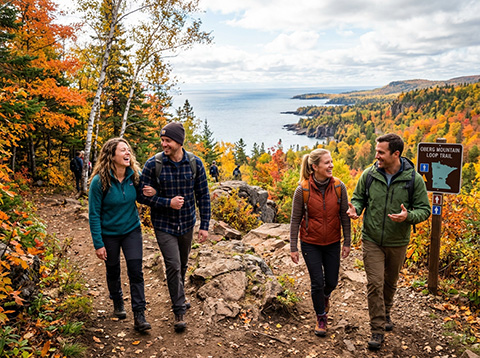
The Oberg Mountain Loop near Lutsen is a relatively short hike that delivers exceptional North Shore scenery. The trail climbs through forest to a series of rocky overlooks positioned around the mountain. Rather than having only one viewpoint at the end, the loop repeatedly rewards hikers with changing panoramas.
Some overlooks face inland toward small lakes surrounded by forested hills, while others provide views toward enormous Lake Superior. This variety makes the hike particularly enjoyable because each section of the ridge reveals something different. The contrast between inland wilderness and the vast blue lake is one of the defining sights of northeastern Minnesota.
Oberg Mountain is legendary during fall foliage season, when the maple forests become brilliant shades of red and orange. It is also beautiful in summer when the hills are deep green. Its combination of manageable distance and outstanding viewpoints makes Oberg Mountain an excellent choice for hikers who want a large scenic reward from a relatively compact hike.
Shovel Point Trail – Tettegouche State Park
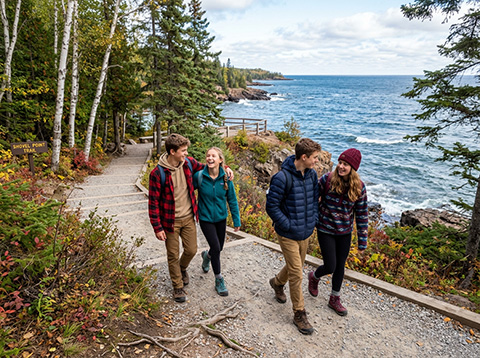
The Shovel Point Trail at Tettegouche State Park provides an outstanding opportunity to experience Minnesota's rugged Lake Superior shoreline. The trail travels through forest and climbs along high cliffs and rocky headlands overlooking the lake. Wooden steps and changes in elevation add some effort to the hike, but the route is accessible enough for many recreational hikers.
Lake Superior dominates the scenery. From overlooks, hikers can watch waves moving against dark volcanic cliffs while the immense lake extends toward the horizon. On windy days the shoreline can feel dramatic and powerful, while calm weather can transform the water into a seemingly endless sheet of blue.
The trail is enjoyable throughout the warmer months, although autumn adds beautiful foliage to the surrounding forest. Early morning and evening light can make the cliffs especially attractive. By taking time at the overlooks rather than rushing along the trail, hikers can fully appreciate why Minnesota's North Shore is considered one of the state's premier outdoor destinations.
High Falls Trail – Grand Portage State Park
The High Falls Trail at Grand Portage State Park leads to Minnesota's tallest waterfall, located on the Pigeon River along the international boundary between the United States and Canada. The route is relatively approachable compared with many rugged North Shore hikes, making it possible for a wide range of visitors to enjoy impressive wilderness scenery.
As hikers approach the river, the sound of falling water becomes increasingly noticeable. High Falls plunges dramatically through a rocky gorge, creating a powerful display when water levels are high. Viewing areas provide excellent perspectives of the falls and the surrounding cliffs and forest.
Spring can be particularly impressive because snowmelt increases the volume of water flowing through the Pigeon River. Summer provides lush forest scenery, while autumn surrounds the gorge with colorful foliage. The combination of an international border, northern forest, river gorge, and enormous waterfall makes this one of Minnesota's distinctive hiking destinations.
Devil's Kettle Trail – Judge C. R. Magney State Park
The Devil's Kettle Trail follows the Brule River through Judge C. R. Magney State Park on Minnesota's North Shore. The hike descends through forest toward a rugged river gorge where waterfalls and rapids create a constantly changing landscape. Numerous stairs make the return climb more strenuous than the distance alone might suggest.
The trail's famous destination is Devil's Kettle, where the Brule River divides around a mass of volcanic rock. One branch descends visibly downstream while the other plunges into a deep pothole in the rock. For many years the destination of that disappearing water inspired considerable mystery, adding an unusual geological story to the hike.
The river gorge itself is just as enjoyable as the famous formation. Rushing water, rocky cliffs, dense northern forest, and waterfalls make the walk visually interesting throughout. Visitors who enjoy geology and unusual natural features will find Devil's Kettle particularly memorable.
Carlton Trail – Jay Cooke State Park
Hiking in Jay Cooke State Park offers a very different experience from Minnesota's Lake Superior cliff trails. The park surrounds a rugged section of the St. Louis River where rushing water moves through a rocky gorge. Trails such as the Carlton Trail allow hikers to explore forests, exposed rock, river scenery, and rolling terrain.
One of the great pleasures of hiking here is watching the river change character. In some places the water rushes violently between rocks, while quieter sections reveal reflections of the surrounding forest. The park's famous swinging bridge area can also provide a memorable beginning or conclusion to an exploration of the trail system.
Autumn is especially beautiful as colorful hardwoods frame the dark rocks and moving water. Spring brings powerful river flows, and summer offers shady woodland hiking. Jay Cooke is a wonderful choice for anyone wanting dramatic river scenery without traveling all the way to Minnesota's far northeastern corner.
Aiton Heights and Hiking Club Trail – Itasca State Park
Itasca State Park offers peaceful forest hiking in one of Minnesota's most historically and geographically significant landscapes. The park protects the headwaters of the Mississippi River, but its trails also travel through beautiful old-growth pine forest, around lakes, and across rolling terrain. Combining trails around Aiton Heights provides an excellent way to experience the quieter side of the park.
Walking beneath towering red and white pines gives this hike a different atmosphere from the rocky North Shore. The forest can be wonderfully peaceful, with birds, squirrels, and occasional larger wildlife providing companionship along the route. The fire tower area at Aiton Heights adds another point of interest to the journey.
After hiking, visitors can travel to the Mississippi headwaters and walk across the young river where it leaves Lake Itasca. The combination of hiking, mature forest, lakes, and the beginning of one of the world's great river systems makes Itasca much more than an ordinary woodland destination.
Minneopa Falls and Bison Range Trails – Minneopa State Park
Minneopa State Park near Mankato demonstrates that excellent Minnesota hiking is not limited to the northern part of the state. The park contains waterfalls, prairie, woodland, river-valley scenery, and a bison range, creating a remarkably varied landscape within a relatively compact area.
Minneopa Falls is one of the main attractions. Minneopa Creek descends in two stages through a picturesque gorge, and surrounding trails allow hikers to explore the wooded landscape around the falls. The sound of falling water and shaded gorge provide a pleasant contrast to the open prairie found elsewhere in the park.
The park's bison herd adds another distinctive element, although the animals must be viewed from a safe distance and visitors should follow all park regulations. Combining waterfall hiking with prairie scenery and wildlife watching provides an experience quite different from the Lake Superior trails. It is an excellent example of southern Minnesota's natural diversity.
Sioux-Hustler Trail – Boundary Waters Canoe Area Wilderness
For hikers seeking a genuine backcountry adventure, the Sioux-Hustler Trail in the Boundary Waters Canoe Area Wilderness offers one of Minnesota's more demanding wilderness experiences. The trail travels through remote forests, past lakes and wetlands, and across rugged terrain far from developed recreation areas. It is better suited to experienced hikers and backpackers than to casual day visitors..
The reward is solitude. Away from roads and busy trailheads, hikers can experience the Boundary Waters as an immense northern wilderness of spruce, pine, birch, rock, and water. Loons may be heard across isolated lakes, and wildlife encounters are possible throughout the region.
This is a hike where preparation is particularly important. Navigation, insects, changing weather, wet or overgrown trail sections, and the remoteness of the area can all add difficulty. For experienced hikers who arrive properly equipped, however, the Sioux-Hustler Trail provides something increasingly difficult to find: several days of genuine wilderness travel through one of Minnesota's wildest landscapes.